
Integrative Biosocial Care
English Version
The Biological Mark of Experience
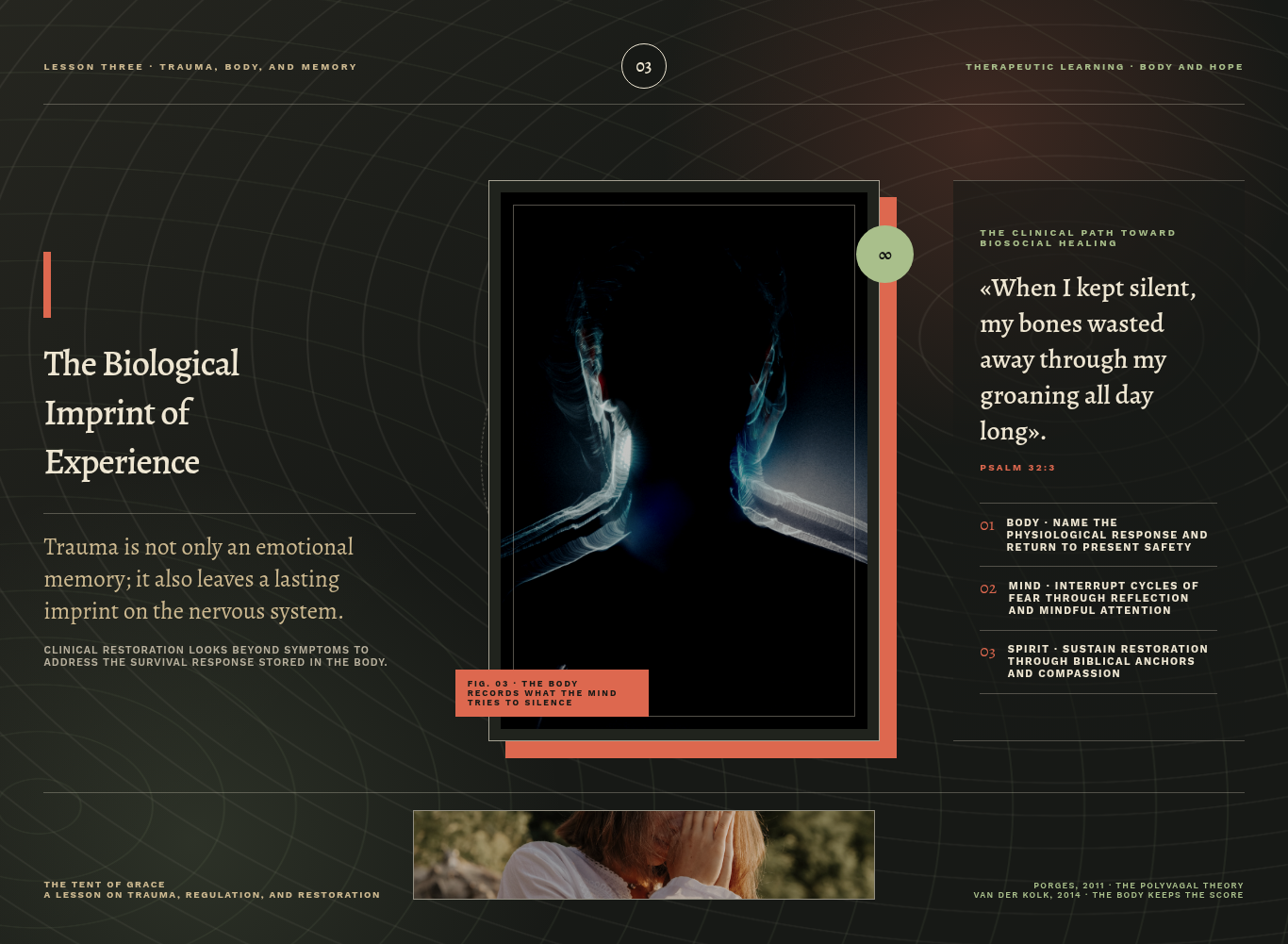
Trauma is not simply an emotional memory; it is a physiological event that leaves a lasting footprint on the nervous system. When a patient experiences chronic adversity, the body stores the response at a cellular level, keeping the nervous system in a perpetual state of survival. Scripture acknowledges this deep somatic connection in passages like Psalm 32:3: "When I kept silent, my bones wasted away through my groaning all day long." True clinical restoration requires moving past surface-level symptoms to address this biological binding.
The Clinical Path of Biosocial Healing
Contemporary psychiatric research proves that trauma alters the hippocampus and dysregulates the hypothalamic-pituitary-adrenal (HPA) axis, locking the individual into repetitive patterns of fear and hypervigilance (Van der Kolk, 2014). To break these loops, an integrative biosocial framework combines cognitive-behavioral therapies with spiritual anchor points. Engaging in structured scriptural reflection and targeted mindfulness regulates autonomic nervous system activity, lowering heart rate variability and prompting neurosomatic stabilization (Porges, 2011).
References
Porges, S. W. (2011). The polyvagal theory: Neurophysiological foundations of emotions, attachment, communication, and self-regulation. W. W. Norton & Company.
Van der Kolk, B. A. (2014). The body keeps the score: Brain, mind, and body in the healing of trauma. Viking.
Privacy Policy | Terms & Conditions | Accessibility Policy
© 2026 The Tent of Grace. A division of Incienso de Gracias Grupo Inc.
All Rights Reserved.
Versión en Español
La Huella Biológica de la Experiencia
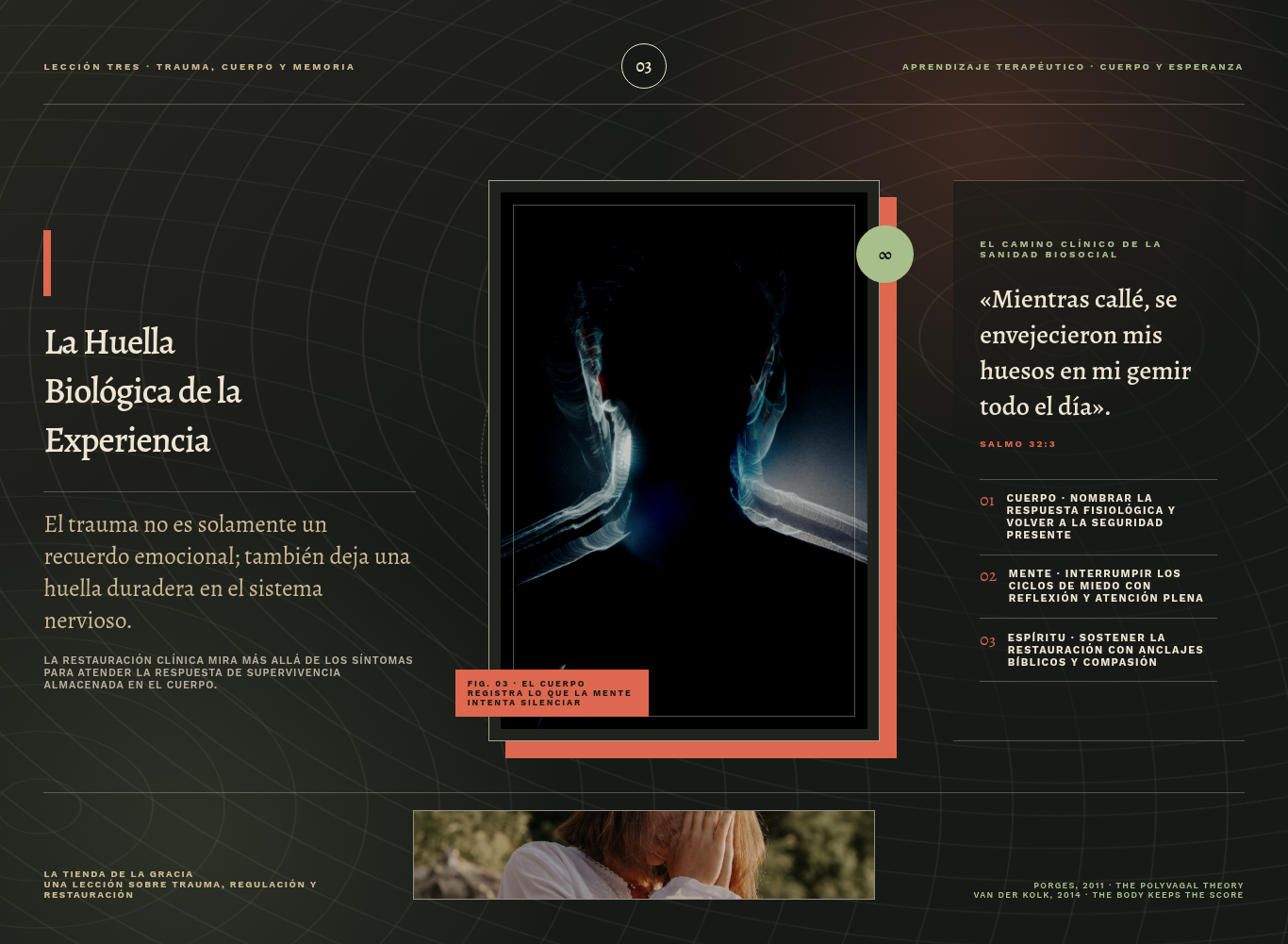
El trauma no es simplemente un recuerdo emocional; es un evento fisiológico que deja una huella duradera en el sistema nervioso. Cuando un paciente experimenta una adversidad crónica, el cuerpo almacena esa respuesta a nivel celular, lo que mantiene al sistema nervioso en un estado perpetuo de supervivencia. La Escritura reconoce esta profunda conexión somática en pasajes como el Salmo 32:3: «Mientras callé, se envejecieron mis huesos en mi gemir todo el día». La verdadera restauración clínica requiere ir más allá de los síntomas superficiales para abordar esta atadura biológica.
El Camino Clínico de la Sanidad Biosocial
La investigación psiquiátrica contemporánea demuestra que el trauma altera el hipocampo y desregula el eje hipotálamo-hipófisis-adrenal (HPA), encerrando al individuo en patrones repetitivos de miedo e hipervigilancia (Van der Kolk, 2014). Para romper estos ciclos, el marco biosocial integrativo combina las terapias cognitivo-conductuales con puntos de anclaje espirituales. Involucrarse en la reflexión bíblica estructurada y la atención plena regula la actividad del sistema nervioso autónomo, disminuyendo la variabilidad del ritmo cardíaco y promoviendo la estabilización neurosomática (Porges, 2011).
Referencias
Porges, S. W. (2011). The polyvagal theory: Neurophysiological foundations of emotions, attachment, communication, and self-regulation. W. W. Norton & Company.
Van der Kolk, B. A. (2014). The body keeps the score: Brain, mind, and body in the healing of trauma. Viking.
Privacy Policy | Terms & Conditions | Accessibility Policy
© 2026 The Tent of Grace. A division of Incienso de Gracias Grupo Inc.
All Rights Reserved.