

The Neurotheology of Grace
English Version
The Biblical Concept of Mind Transformation
The Apostle Paul writes in Romans 12:2, "Do not be conformed to this world, but be transformed by the renewing of your mind." This scripture introduces a foundational clinical premise: human thoughts, cognitive loops, and core beliefs are not static. Divine intervention, combined with intentional scriptural focus, allows individuals to break away from destructive behavioral patterns and step into a restored identity.
The Science of Neuroplasticity
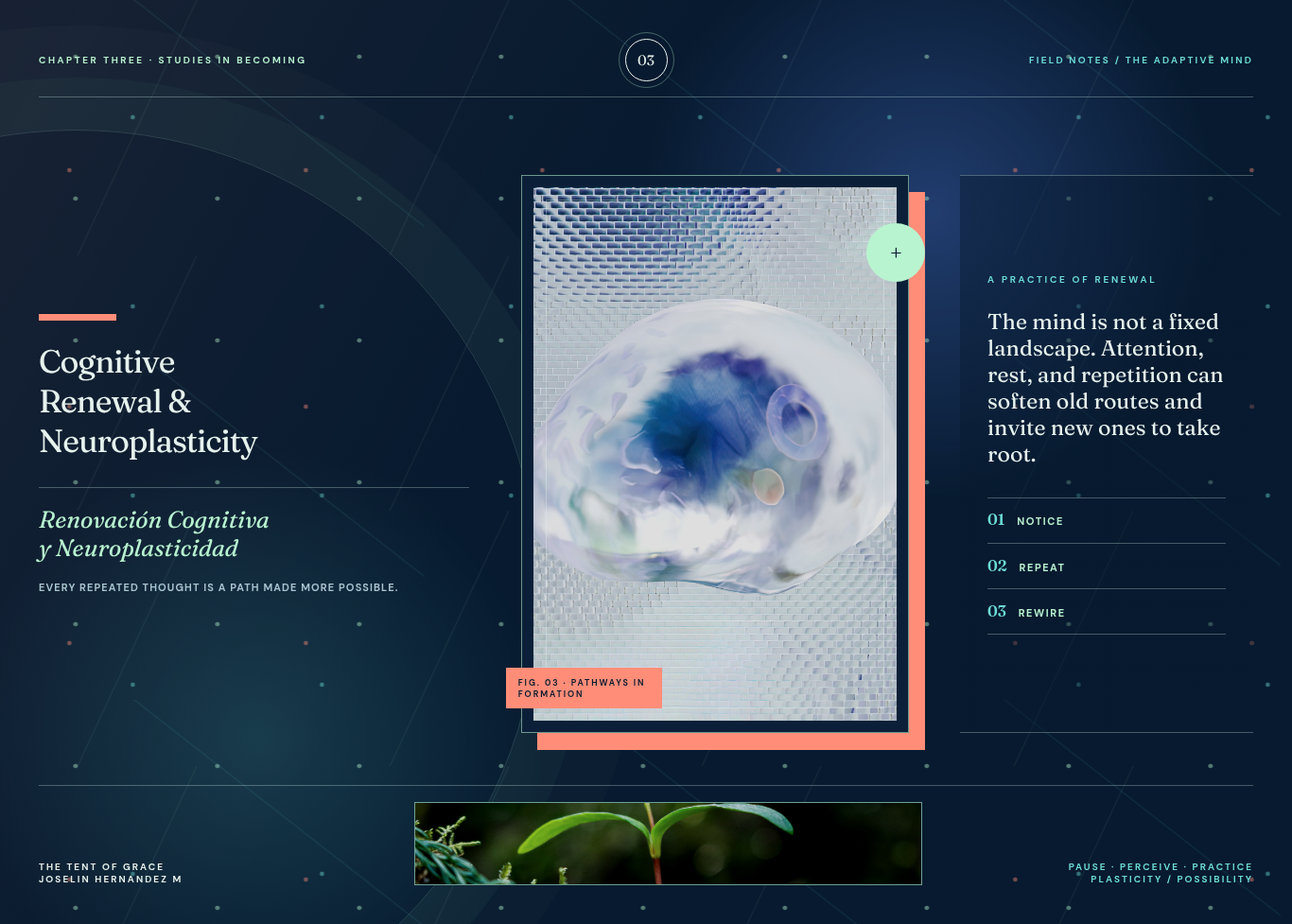
For decades, traditional medicine believed the adult brain was completely unchangeable. However, contemporary neuroscience has proven the reality of neuroplasticity—the brain's ability to reorganize its structure by forming new neural connections throughout a person's life (Doidge, 2007). When a patient engages in faith-based cognitive restructuring, they are actively changing their brain's physical architecture. Synaptic pathways associated with fear, trauma, or maladaptive coping mechanisms weaken through disuse, while new, healthy networks are strengthened through active scripture meditation and prayer (Newberg & Waldman, 2010).
References
Doidge, N. (2007). The brain that changes itself: Stories of personal triumph from the frontiers of brain science. Viking.
Newberg, A., & Waldman, M. R. (2010). How God changes your brain: Breakthrough findings from a leading neuroscientist. Ballantine Books.
Versión en Español
El Concepto Bíblico de la Transformación Mental
El apóstol Pablo escribe en Romanos 12:2: «No os conforméis a este siglo, sino transformaos por medio de la renovación de vuestro entendimiento». Esta Escritura introduce una premisa clínica fundamental: los pensamientos, los bucles cognitivos y las creencias esenciales del ser humano no son estáticos. La intervención divina, combinada con un enfoque intencional en las Escrituras, permite a los individuos romper con patrones de comportamiento destructivos y caminar hacia una identidad restaurada.
La Ciencia de la Neuroplasticidad
Durante décadas, la medicina tradicional creyó que el cerebro adulto era completamente inmutable. Sin embargo, la neurociencia contemporánea ha demostrado la realidad de la neuroplasticidad: la capacidad del cerebro para reorganizar su estructura formando nuevas conexiones neuronales a lo largo de la vida de una persona (Doidge, 2007). Cuando un paciente se involucra en una reestructuración cognitiva basada en la fe, cambia activamente la arquitectura física de su cerebro. Las vías sinápticas asociadas con el miedo, el trauma o los mecanismos de afrontamiento desadaptativos se debilitan por el desuso, mientras que las redes nuevas y saludables se fortalecen mediante la meditación activa en las Escrituras y la oración (Newberg & Waldman, 2010).
Referencias
Doidge, N. (2007). The brain that changes itself: Stories of personal triumph from the frontiers of brain science. Viking.
Newberg, A., & Waldman, M. R. (2010). How God changes your brain: Breakthrough findings from a leading neuroscientist. Ballantine Books.
Cognitive Renewal & Neuroplasticity / Renovación Cognitiva y Neuroplasticidad
-
Add a short summary or a list of helpful resources here.