

Integrative Biosocial Care
Attachment Theory and Divine Grace / La Teoría del Apego y la Gracia Divina
The Neurobiology of Secure Attachment
In developmental psychology, attachment theory posits that consistent, secure bonds during the formative years shape an individual's emotional regulation capacities throughout life (Bowlby, 1982). Neurally, secure attachments foster optimal development of the right hemisphere and enhance the brain's ability to modulate cortisol responses during crises. When these human bonds are fractured, the nervous system remains in a chronic state of hypervigilance, making interpersonal relationships difficult.
The Restorative Power of Divine Grace
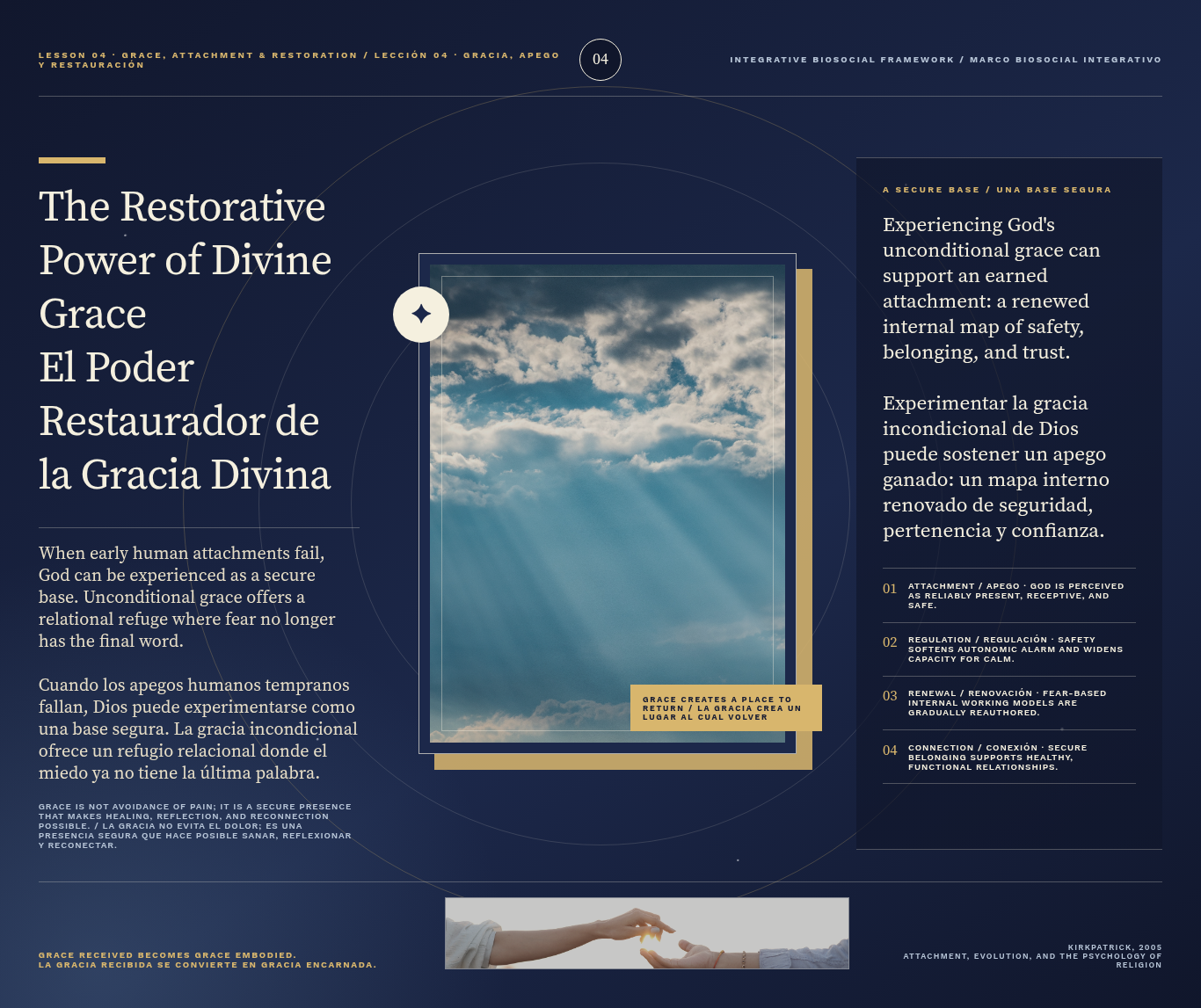
From an integrative biosocial framework, when early human attachments fail, the theological concept of God as a secure base becomes a primary clinical anchor. Experiencing the unconditional grace of God allows the brain to experience a secure "earned attachment" (Kirkpatrick, 2005). This perception systematically restructures internal working models of fear, regulating the autonomic nervous system and allowing the patient to build healthy, functional social connections in their environment.
Español Versión
La Neurobiología del Apego Seguro
En la psicología del desarrollo, la teoría del apego sostiene que los vínculos consistentes y seguros durante los años formativos determinan la capacidad de regulación emocional de un individuo a lo largo de su vida (Bowlby, 1982). A nivel neuronal, los apegos seguros fomentan el desarrollo óptimo del hemisferio derecho y mejoran la capacidad del cerebro para modular las respuestas de cortisol durante las crisis. Cuando estos vínculos humanos se fracturan, el sistema nervioso permanece en un estado crónico de hipervigilancia, lo que dificulta las relaciones interpersonales.
El Poder Restaurador de la Gracia Divina
Desde un marco biosocial integrativo, cuando los apegos humanos tempranos fallan, el concepto teológico de Dios como base segura se convierte en un anclaje clínico primordial. Experimentar la gracia incondicional de Dios permite al cerebro experimentar un "apego seguro adquirido" (Kirkpatrick, 2005). Esta percepción reestructura sistemáticamente los modelos internos de miedo, regula el sistema nervioso autónomo y permite al paciente construir conexiones sociales saludables y funcionales en su entorno.
-
Add a short summary or a list of helpful resources here.